
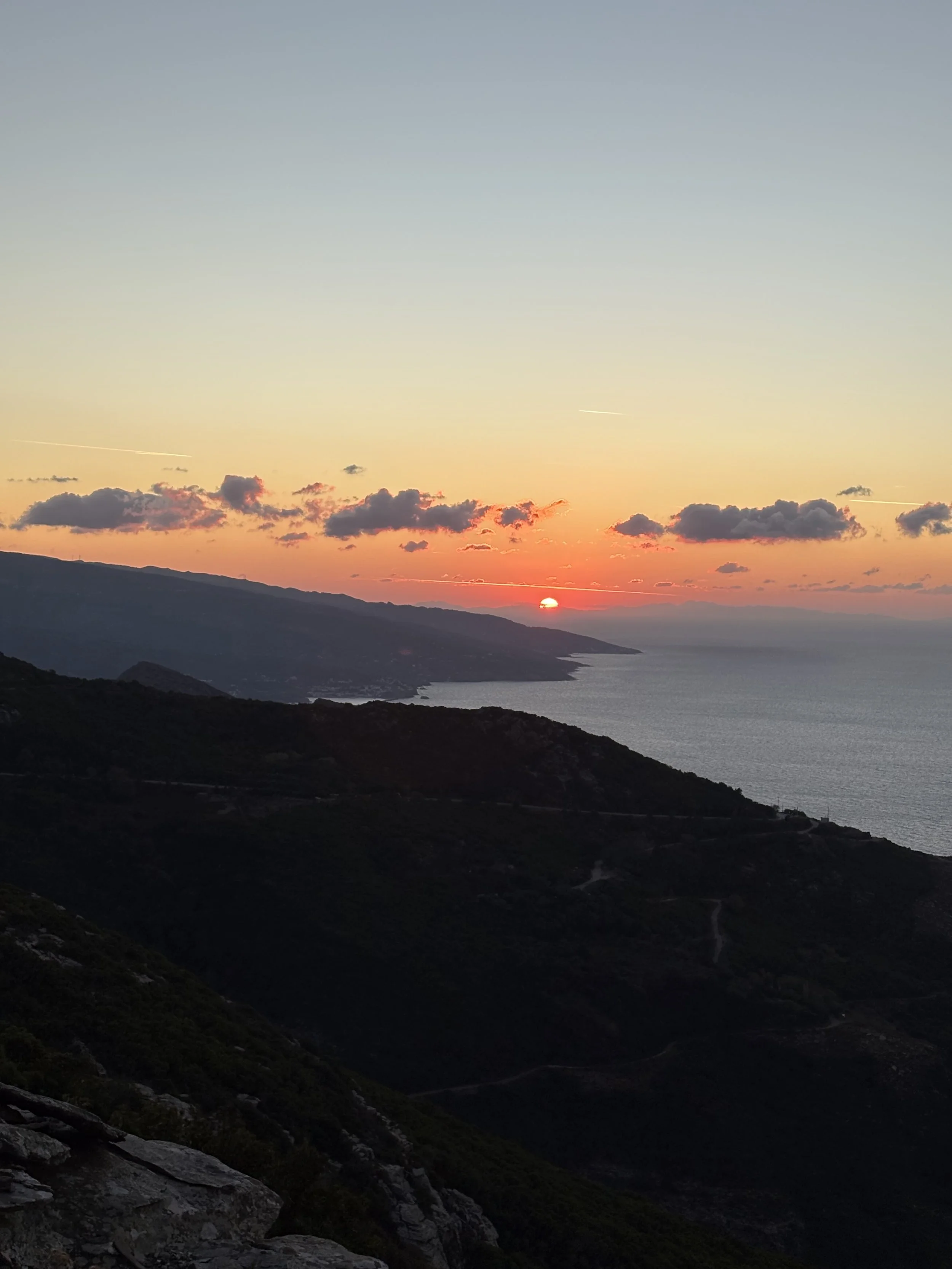
There are few places on earth where time seems to stretch — where people don’t just live long, but live well. Ikaria, one of the world’s Blue Zones, is famous for its joyful longevity. I went there for a holotropic breathwork workshop and longevity cooking classes — and came home with more than teas and recipes.
Breathing with the Island
High in the Ikarian hills, surrounded by wild herbs and sea air, our small group gathered for breathwork — deep, rhythmic sessions that felt like pressing “reset” on body and mind. Breathing in the salt of the Aegean, exhaling the rush of everyday life, I felt my system slow to the island’s own unhurried rhythm.
Cooking Lessons in Longevity
Between sessions, I joined local women in their kitchens to explore the Ikarian way of eating — simple, seasonal, and full of soul. We cooked with olive oil, beans, and wild greens, learning that food here is never rushed or complicated. Meals are shared, laughter flows, and wellness is a natural byproduct of connection.
What I Brought Back
As a foodie and wellness junkie, my suitcase overflowed with sensory souvenirs:
Olive Oil: Rich and peppery.
Honey: Amber, herbal, and healing — locals swear by a spoonful a day.
Teas: Blends of sage, nettle, rosemary, thyme, and mountain tea — sipped morning and night for calm and vitality.
Saffron and Wild Herbs: Bright, fragrant reminders of the island’s abundance.
Each carries the essence of Ikaria — slow, grounded, and full of life.
Lessons from the Blue Zone
Ikaria taught me that longevity isn’t a secret diet or supplement; it’s a way of being. It’s movement that feels natural, food that nourishes, and time shared generously.
Now, when I drizzle Ikarian olive oil on my salad or steep sage tea at night, I return to that hillside — breathing deeply, heart open, and life beautifully unhurried.


Maca (pronounced mah-kah), or maca root, grows exclusively in the mountains of Peru and at very high altitudes. (We source our maca from a farm at 18,000 feet!) Due to the harsh conditions, it’s one of the only things that grows at that height.
The name “maca root” is misleading because it’s actually a cruciferous vegetable, which means it's related to kale, broccoli, cauliflower and cabbage.
Maca root, also known as Peruvian ginseng, grows underground and looks similar to a parsnip. It comes in a variety of colors. Loaded with important vitamins and minerals, as well as 20 amino acids.
Like other cruciferous vegetables, maca contains glucosinolates which are known for their anti-cancer effects.
One ounce (28 grams) of maca root powder contains:
Calories: 91
Carbs: 20 grams
Protein: 4 grams
Fiber: 2 grams
Fat: 1 gram
Vitamin C: 133% of the RDI
Copper: 85% of the RDI
Iron: 23% of the RDI
Potassium: 16% of the RDI
Vitamin B6: 15% of the RDI
Manganese: 10% of the RDI